
Are Prostate Peptides Safe? Key Things Men Should Know
Covering safety, dosing considerations and possible side effects of prostate peptide bioregulators
Medical disclaimer: This article is for informational and educational purposes only. It does not constitute medical advice. The Nature’s Marvels™ Prostate Bioregulator is a food supplement, not a medicine. Always consult a qualified healthcare professional before starting any new supplement, especially if you have a pre-existing health condition or take prescription medication. This product is not intended to diagnose, treat, cure, or prevent any disease.
- What are prostate peptide bioregulators?
- How do they work at the cellular level?
- Safety profile: what does the research show?
- Possible side effects and who should avoid them
- Dosing considerations for the Nature’s Marvels™ Prostate Bioregulator
- Frequently asked questions
1. What are prostate peptide bioregulators?
Peptide bioregulators are short-chain amino acid sequences that act as tissue-specific cellular signals – essentially molecular instructions that tell your body to repair, regenerate, and maintain a specific organ.
The concept was pioneered over four decades ago by Professor Vladimir Khavinson at the St. Petersburg Institute of Bioregulation and Gerontology. Originally developed as part of classified Soviet military medical research – used to protect troops from radiation exposure, extreme environments, and battlefield trauma – his discoveries were later published in over 775 peer-reviewed scientific papers and protected by 196 international patents. We have a wealth of information about peptides and Dr Khavinson over at Aging Matters™ Magazine.
Prostate-specific bioregulators contain peptide complexes extracted from the prostate gland tissue of young animals (typically bovine). These small peptides mirror those naturally present in the human prostate, allowing them to interact directly with prostate cells in a tissue-selective way.
Nature’s Marvels™ Prostate Bioregulator contains Peptide Complex A-16, derived from bovine prostate tissue using Professor Khavinson’s patented extraction technology. Each capsule delivers 20 mg of active prostate-specific peptides, encapsulated in a vegetable (HPMC) capsule with gluten-free brown rice flour.
This product is not a pharmaceutical drug; it is a food supplement widely used as a natural adjunct for supporting prostate health in ageing men.
Prostate peptide bioregulators are distinct from herbal/plant supplements (such as saw palmetto or beta-sitosterol which are also known to support prostate health). Rather than providing plant compounds or nutrients, they deliver prostate-specific peptides that interact with gene expression and cellular repair processes at the DNA level.
2. How do prostate peptides work at the cellular level?
Understanding the mechanism behind how prostate bioregulators work helps to explain why they have such an unusually clean safety profile compared to pharmaceutical alternatives.
Epigenetic gene regulation
Unlike drugs that block receptors, force hormonal changes, or suppress immune activity, peptide bioregulators work epigenetically. They enter the cell nucleus and interact with specific DNA sequences, effectively reactivating genes that have become silenced or under-expressed with age. This is sometimes described as “switching genes back on” rather than overriding the body’s normal processes.
Research has demonstrated that prostate peptides from the Khavinson family can increase chromatin decondensation – essentially loosening tightly packed DNA strands in aged cells – which allows silenced genes to become active again and restores the cell’s capacity for normal protein synthesis and function. [1]
“Each organ and gland appears to use highly specific short-chain peptides as a shortcut to initiate protein synthesis and activate repair processes. These act as individualized gene switches.”
– St. Petersburg Institute of Bioregulation and Gerontology
Tissue specificity: why this matters for safety
Because each bioregulator is derived from – and selective for – a single organ type, it does not trigger systemic hormonal cascades or broad immune responses. The peptide complex in the Nature’s Marvels™ Prostate Bioregulator preferentially targets prostate cells, making unwanted off-target effects rare.
This tissue specificity is a key reason why these peptides have been used for decades – including on thousands of military personnel across multiple decades – without reports of serious adverse effects.
Key mechanisms identified in research
- Anti-inflammatory action:Reduces inflammatory markers in prostate tissue, including tissue swelling (oedema), vascular hyperaemia and lymphoid cell infiltration.
- Chromatin remodelling:Promotes deheterochromatinisation in aged cells, potentially restoring transcriptional activity to genes silenced during ageing.
- Antioxidant properties:Clinical data suggests Libidon peptides help regulate peroxidation processes within prostate tissue, reducing oxidative stress on cells.
- Metabolism normalisation:Restores normal metabolic activity within prostate cells, supporting the organ’s own regenerative capacity rather than forcing external correction.
3. Safety profile: what does the research show?
The safety record accumulated over more than 40 years of research is one of the most compelling aspects of Khavinson peptide bioregulators.
In the landmark 2011 clinical study conducted at the Medical Centre of the St. Petersburg Institute of Bioregulation and Gerontology – covering 48 treatment-group patients aged 38–65 – no side effects, no complications, and no drug dependence were recorded in any participant. A zero adverse-event rate across an entire clinical trial is uncommon in pharmaceutical research. [2]
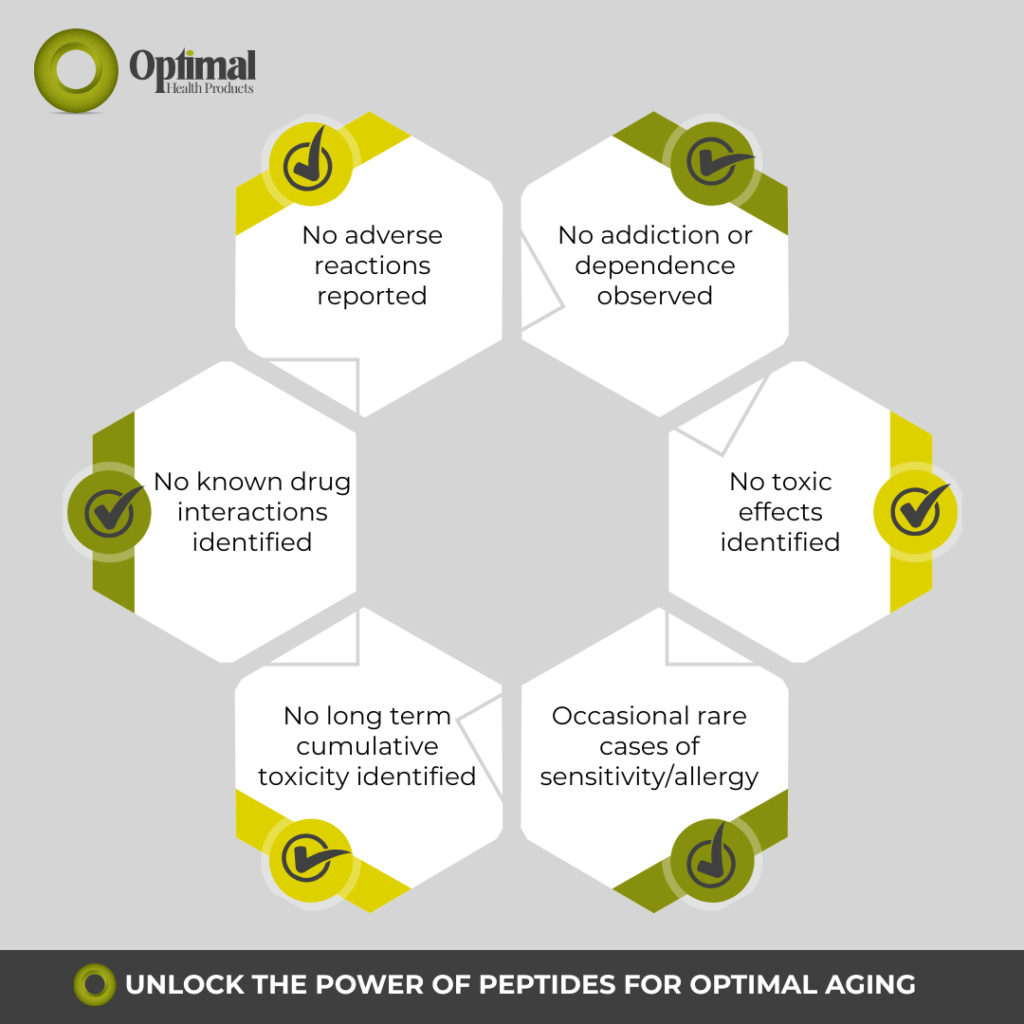
The fundamental reason for this safety profile lies in the biochemistry: because these peptides are identical in structure to those naturally occurring in human prostate tissue, the body recognises them as endogenous signals rather than foreign substances. They support normal physiological processes rather than overriding or suppressing them.
Professor Khavinson’s group has noted across multiple publications that peptide bioregulators “lack any toxic, allergic, or adverse effects,” a finding that has been confirmed in both experimental animal models and extensive human clinical use.
4. Possible side effects and who should avoid them
While the overall safety record is exceptionally strong, it is important to be accurate and transparent about the known risks and contraindications.
Known possible side effects
The Nature’s Marvels™ product documentation states that while Russian studies “have been carried out over several decades and have demonstrated a remarkable safety record,” occasional cases of sensitivity or allergy may occur. If this happens, users are advised to reduce the dose or cease use depending on severity.
Because the peptide complex is derived from bovine prostate tissue, individuals with known sensitivities to animal-derived products should exercise appropriate caution.
Who should NOT use prostate peptide bioregulators
Do not use if you are:
- A child or adolescent (not for use under age 18)
- Pregnant or breastfeeding (use is contraindicated)
- Known to have an allergy or sensitivity to bovine (cattle) products or to any listed ingredient
Always consult your doctor first if you:
- Have a diagnosed prostate condition including prostate cancer (do not use as a substitute for medical treatment)
- Take prescription medications for prostate conditions (e.g. alpha-blockers, 5-alpha reductase inhibitors, anti-androgens)
- Have any other pre-existing medical conditions
Comparing safety to pharmaceutical alternatives
For context, standard pharmaceutical treatments for benign prostatic hyperplasia (BPH) – such as alpha-blockers (e.g. tamsulosin) and 5-alpha reductase inhibitors (e.g. finasteride) – carry documented side effects including dizziness, retrograde ejaculation, sexual dysfunction, and in some cases depression. These are systemic drugs that alter hormonal signalling throughout the body.
Peptide bioregulators operate through a fundamentally different mechanism and, based on available evidence, do not carry these systemic risks. However, they should be viewed as complementary to – not a replacement for – medical care.
5. Dosing considerations for the Nature’s Marvels™ Prostate Bioregulator
One of the most distinctive features of peptide bioregulators is that they do not require daily long-term use in the way that most supplements or medications do. The bioregulatory mechanism continues to produce effects for weeks to months after a completed course.
| Use Case | Dose | Duration | Repeat Frequency |
| Healthy maintenance (preventive use in men 40+) | 2 capsules once daily with meals | 10 days (1 pack) | Every 3–6 months |
| Moderate concern (mild symptoms, general prostate support) | 2 capsules once daily with meals | 10 days (1 pack) | Every 1–2 months |
| Initial intensive course (active symptoms, under medical supervision) | 2 capsules once daily with meals | 30 days (3 packs) | Then switch to maintenance dose |
| Clinical protocol (as used in St. Petersburg trials) | 1 capsule twice daily at mealtimes | 30 days | Repeat in 4–6 months |
Important dosing notes:
- Always take capsules with or immediately after meals to optimise absorption and minimise any digestive sensitivity.
- Do not exceed the recommended daily dose. Bioregulators do not follow a “more is better” principle – they work by restoring normal cellular function, not by forcing it.
- Storage: keep in a cool, dark place between +2°C and +25°C. Do not use past the expiry date shown on the blister pack. Expiry is three years from the date of production.
Combining Prostate Bioregulators with other Bioregulators
Nature’s Marvels™ Prostate Bioregulator can be used alongside other organ-specific bioregulators for comprehensive male health support. It is commonly combined with:
- Bladder Bioregulator for urinary tract support, particularly where urinary symptoms are prominent.
- Testes Bioregulator for broader male reproductive and hormonal support.
- Blood Vessel Bioregulator to support pelvic microcirculation, which is important in prostate health.
Frequently Asked Questions about Prostate Bioregulators
Can I take the Prostate Bioregulator alongside my prescribed prostate medication?
Always consult your doctor before combining any supplement with prescription medications. In the clinical studies, Libidon was administered alongside standard therapy as an adjunct without reported interactions. However, medical supervision is essential, particularly with alpha-blockers or 5-alpha reductase inhibitors.
How quickly does it work?
Clinical data suggests meaningful improvements become apparent within the 30-day treatment course, with continued benefit in the weeks and months following. Many users report subtle changes within 7–14 days. The bioregulatory mechanism continues to act for months after a completed course.
Is it suitable for men with prostate cancer?
Men with a prostate cancer diagnosis must not use this or any supplement without explicit medical guidance from their oncologist or urologist. This product is not a cancer treatment.
What is the difference between a cytomax and a cytogen?
Cytomaxes are natural peptide extracts from animal organs. Cytogens are synthetic versions of the same peptide sequences. Nature’s Marvels™ Prostate Bioregulator uses the natural cytomax form. Both have been studied in the Khavinson programme; natural extracts are considered to deliver the broadest spectrum of tissue-specific peptide fractions.
Do I need to cycle off it?
No extended cycling off is required. The recommended protocol already builds in rest periods (10 active days followed by weeks to months off). Unlike hormonal therapies, there is no known rebound effect or suppression of endogenous function when the course is completed.
Nature’s Marvels™ Prostate Bioregulator
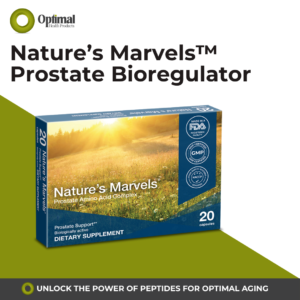
Peptide Complex A-16 from bovine prostate tissue, formulated to Khavinson’s patented extraction standard. Vegetable capsule. Gluten-free.
References & further reading
[1] Springer Nature Link: Effects of Short Peptides on Lymphocyte Chromatin in Senile Subjects (2004)
[2] Anti Aging Systems: REPORT on the results of clinical study of peptide bioregulator Libidon (2011)